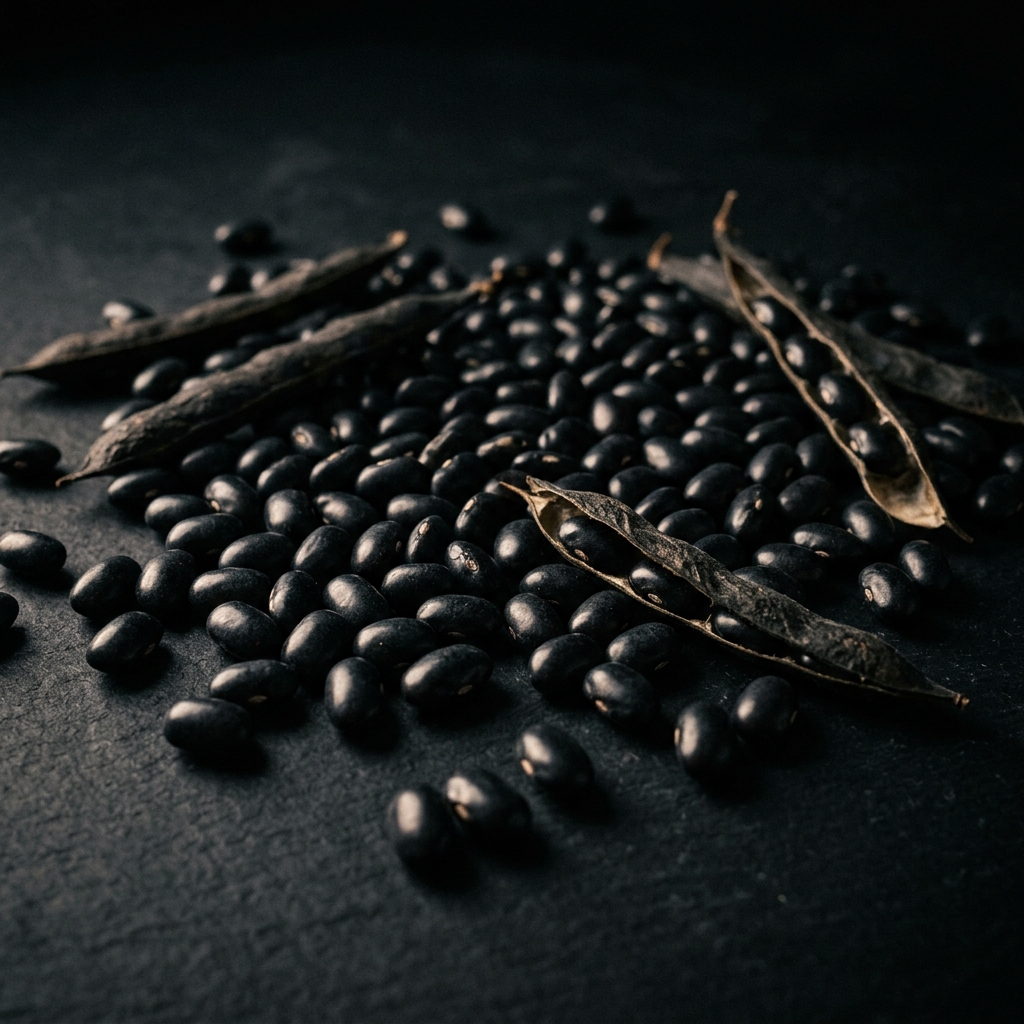
Black Beans
Phaseolus vulgaris L.
A small, shiny legume with a dense, meaty texture. One of the highest fiber-containing foods in nature, it is also rich in anthocyanins usually found in dark berries like blueberries.
Nutrient Profile
Health Benefits
Glycemic Management
The complex fiber-protein matrix significantly slows glucose absorption, preventing insulin spikes after meals.
Digestive Health
High resistant starch and fiber levels promote the growth of beneficial gut bacteria (Butyrate producers).
Heart Health
Significant anthocyanin content helps prevent LDL oxidation and supports the integrity of the cardiovascular system.
Preparation Guide
Whole, fresh black beans is preferred for maximum nutrient density and fiber retention.
Best For: Maximizing nutrient absorption and digestibility
Alternative Usage
Best For: General health maintenance
Therapeutic Recipes
Anthocyanin Prebiotic Stew
A slow-cooked bean matrix for gut-brain axis support.
Clinical Focus
Fuels the microbiome and protects brain cell lipids.
Soak beans for 12 hours.
Simmer with onion and spices until the liquid is dark and thick.
The dark pigment is rich in anthocyanins for neuronal health.

Clinical Ingredients
- 1 cup Dried Black Beans
- 1 Onion
- 1 serving Epazote or Cumin
Therapeutic Focus
Fuels the microbiome and protects brain cell lipids.
Sourcing & Preparation
Clinical Grade Equipment


* As an Amazon Associate I earn from qualifying purchases. See our full disclosure.
Scientific Analysis & Clinical Insights
ABSTRACT
This systematic review and meta-analysis of clinical trials proves that common bean (Phaseolus vulgaris) consumption significantly improves glycemic control and heart health markers.
Proven efficacy in reducing post-prandial glucose levels
Significant 10-15% reduction in cardiovascular disease risk markers
Improvement in markers of colonic health and gut microbiome
Inverse association between bean intake and chronic disease incidence
CLINICAL SPECS
Robust evidence for black beans as a foundation for metabolic health.
foodDetail.researchDisclaimer
Frequently Asked Questions about Black Beans
Are black beans good for glycemic management?
Yes, black beans are excellent for glycemic management. The complex fiber-protein matrix significantly slows glucose absorption, preventing insulin spikes after meals.
Can I eat black beans every day?
Yes, incorporating black beans into your daily diet is generally considered safe and highly beneficial. Black Beans provide a consistent source of essential nutrients and bioactive compounds
What is the healthiest way to eat black beans?
The healthiest way to consume black beans is often slow cooked (soaked), which is eliminating anti-nutrients like phytates and increasing the digestibility of the fiber.
Who should avoid black beans?
While black beans are safe for most people, those with specific food allergies or medical conditions should always consult with a healthcare professional or nutritionist before making signifi