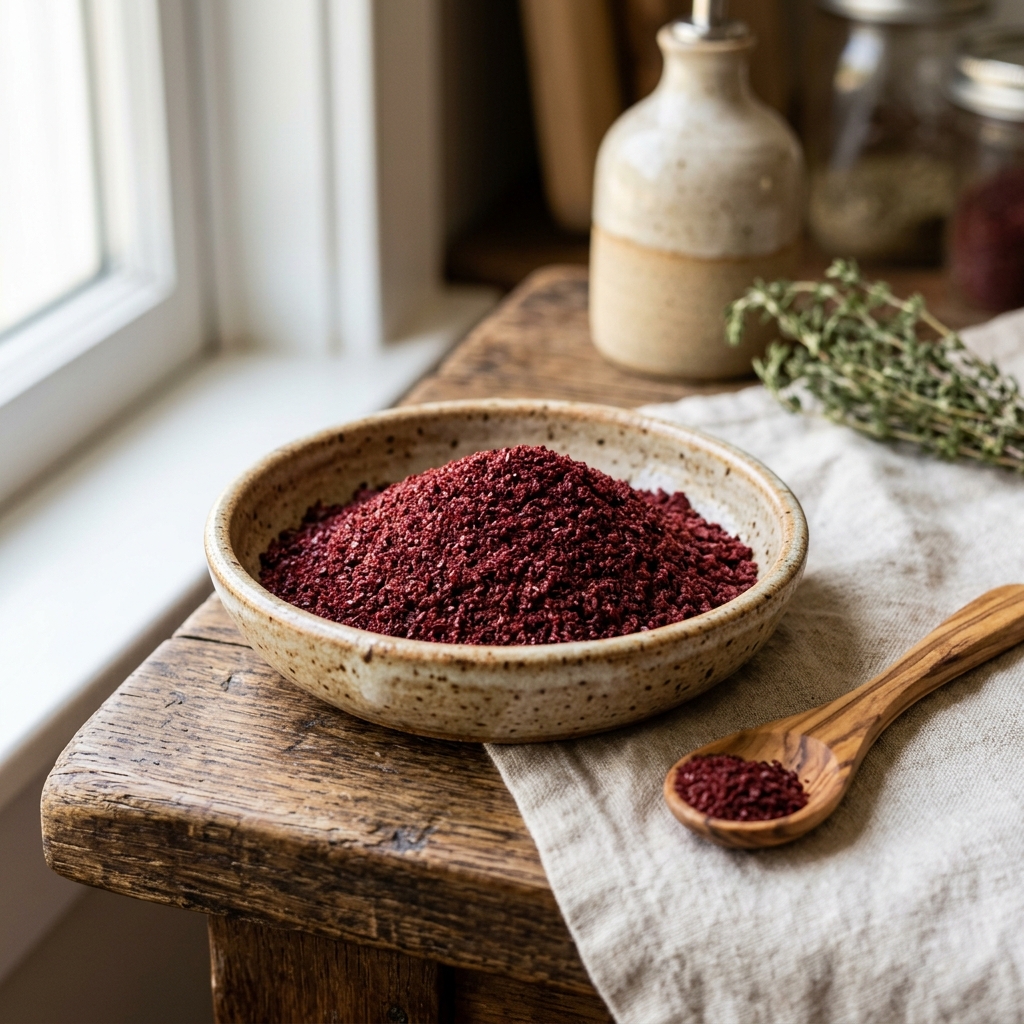
Sumac
Rhus coriaria
A vibrant, deep-red spice heavily utilized in Middle Eastern cuisine, known for its bright, tangy, citrus-like flavor. In clinical nutrition, sumac is a quiet giant: it possesses one of the h
Nutrient Profile
Health Benefits
Glycemic Control & Diabetes Management
Clinical studies have shown that daily supplementation with sumac significantly lowers fasting blood glucose, HbA1c, and insulin resistance markers in patients with type 2 diabetes.
Massive Antioxidant Defense
With its chart-topping ORAC value, sumac aggressively neutralizes free radicals, protecting cellular DNA from oxidative damage and preventing the lipid peroxidation that leads to cardiovascul
Anti-Inflammatory Action
The dense concentration of gallic acid and anthocyanins powerfully downregulates systemic inflammation pathways, offering relief for chronic inflammatory conditions and joint pain.
Preparation Guide
Sprinkle generously on salads, hummus, roasted vegetables, or meats after cooking.
Best For: Preserving the delicate antioxidant compounds from high heat degradation.
Alternative Usage
Best For: Can be steeped in cold water to make a tart, refreshing, antioxidant-rich tea.
Therapeutic Recipes
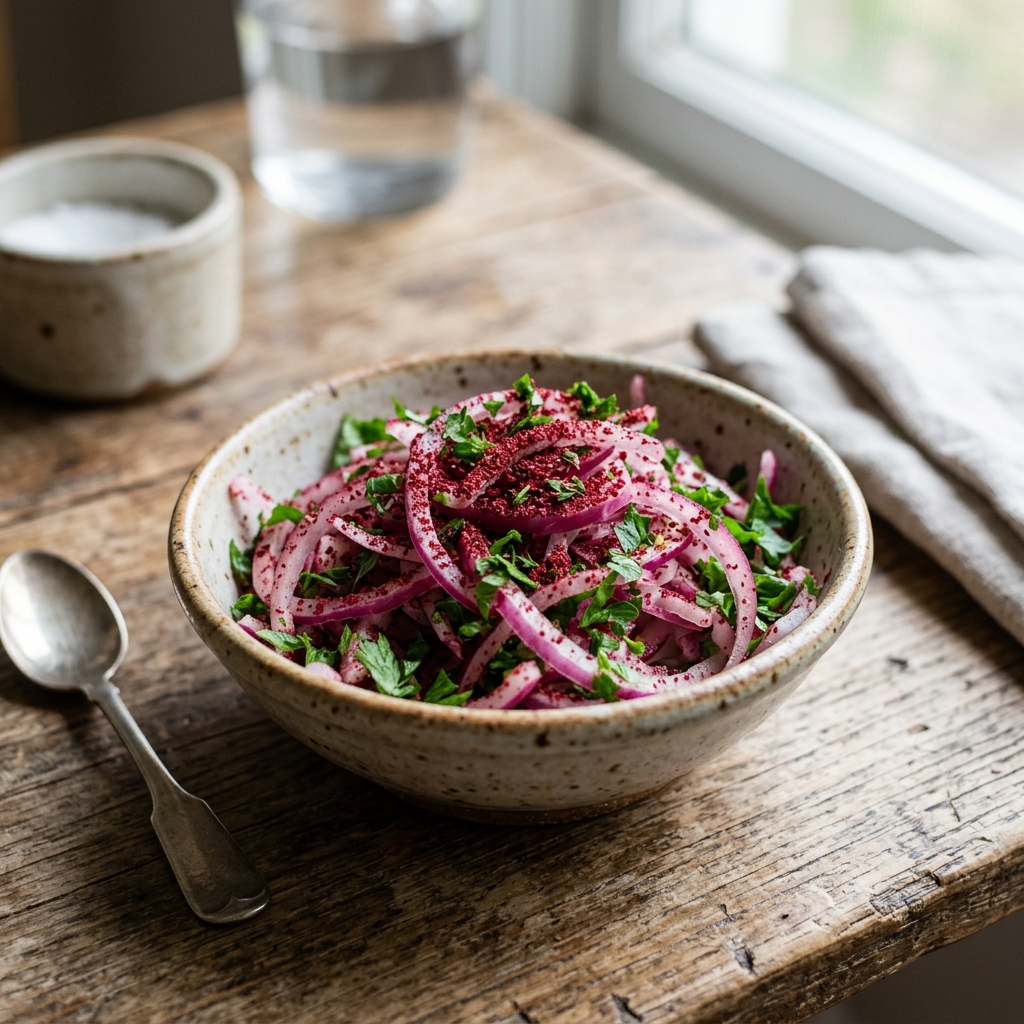
Metabolic Sumac & Onion Elixir (Salad)
A traditional, intensely flavorful accompaniment that synergizes the quercetin in red onions with the massive antioxidant payload of sumac.
Clinical Focus
Blood sugar regulation, cardiovascular protection, and immune modulation.
Place the thinly sliced red onions in a bowl. Sprinkle the sumac directly over them.
Using your hands, massage the sumac firmly into the onions for about 1 minute until the onions soften and release their juices.
Add the chopped parsley, olive oil, lemon juice, and a pinch of salt. Toss well.
Let the mixture sit for at least 15 minutes to allow the bioflavonoids and tannins to activate and meld.
Clinical Ingredients
- 1 large Red Onion, very thinly sliced
- 2 tbsp ground organic Sumac
- 1/2 cup fresh parsley, chopped
- 1 tbsp extra virgin olive oil
- Juice of half a lemon
- Sea salt to taste
Therapeutic Focus
Blood sugar regulation, cardiovascular protection, and immune modulation.
Sourcing & Preparation
Clinical Grade Equipment


* As an Amazon Associate I earn from qualifying purchases. See our full disclosure.
Scientific Analysis & Clinical Insights
ABSTRACT
A randomized, double-blind, placebo-controlled clinical trial investigated the effects of Rhus coriaria (sumac) on glycemic control and antioxidant status in patients with type 2 diabetes. Th
Significant decrease in fasting blood glucose and HbA1c
Lowered apolipoprotein B levels (cardiovascular risk marker)
Increased total antioxidant capacity in the blood
Demonstrated powerful lipid-lowering properties
CLINICAL SPECS
Provides Level 1 clinical evidence that sumac is a highly effective functional spice for managing metabolic syndrome and diabetic complications.
foodDetail.researchDisclaimer
Frequently Asked Questions about Sumac
Is the sumac spice related to poison sumac?
They are in the same broad botanical family, but culinary sumac (Rhus coriaria) is completely safe and non-toxic. Poison sumac has white berries, whereas culinary sumac is easily identified b
What does it taste like?
Sumac has a tart, bright, lemony flavor but without the high acidity of actual citrus juice. It adds a beautiful 'zing' to savory dishes.