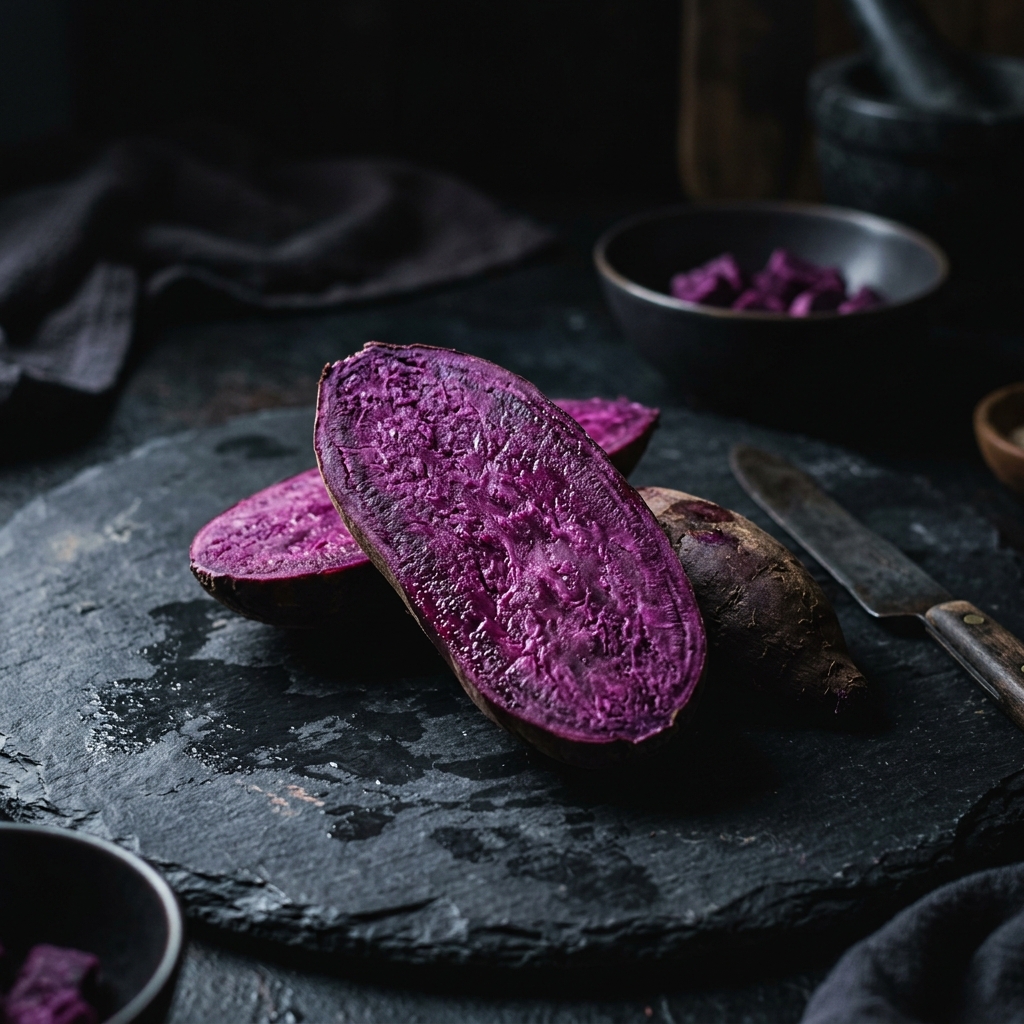
Ube (Purple Yam)
Dioscorea alata
A vibrant purple tuber native to Southeast Asia, famous for its sweet, earthy flavor and striking color. Ube's deep purple pigment is an indicator of its extraordinarily high anthocyanin cont
Nutrient Profile
Health Benefits
Cognitive Protection
The anthocyanins in Ube easily cross the blood-brain barrier to neutralize free radicals, potentially delaying age-related cognitive decline and protecting neuroplasticity.
Cellular Health & DNA Protection
Its massive antioxidant capacity helps protect cells from oxidative stress and DNA damage, which are primary drivers of aging and chronic diseases.
Metabolic Regulation
Unlike refined carbohydrates, the complex starches and fiber in Ube provide a slow, steady release of energy, helping to stabilize blood sugar levels.
Preparation Guide
Steamed, baked, or boiled. Avoid heavily processed Ube desserts loaded with sugar.
Best For: Maximizing nutrient absorption and digestibility
Alternative Usage
Best For: Ube powder (without added sugars) can be used in smoothies.
Therapeutic Recipes
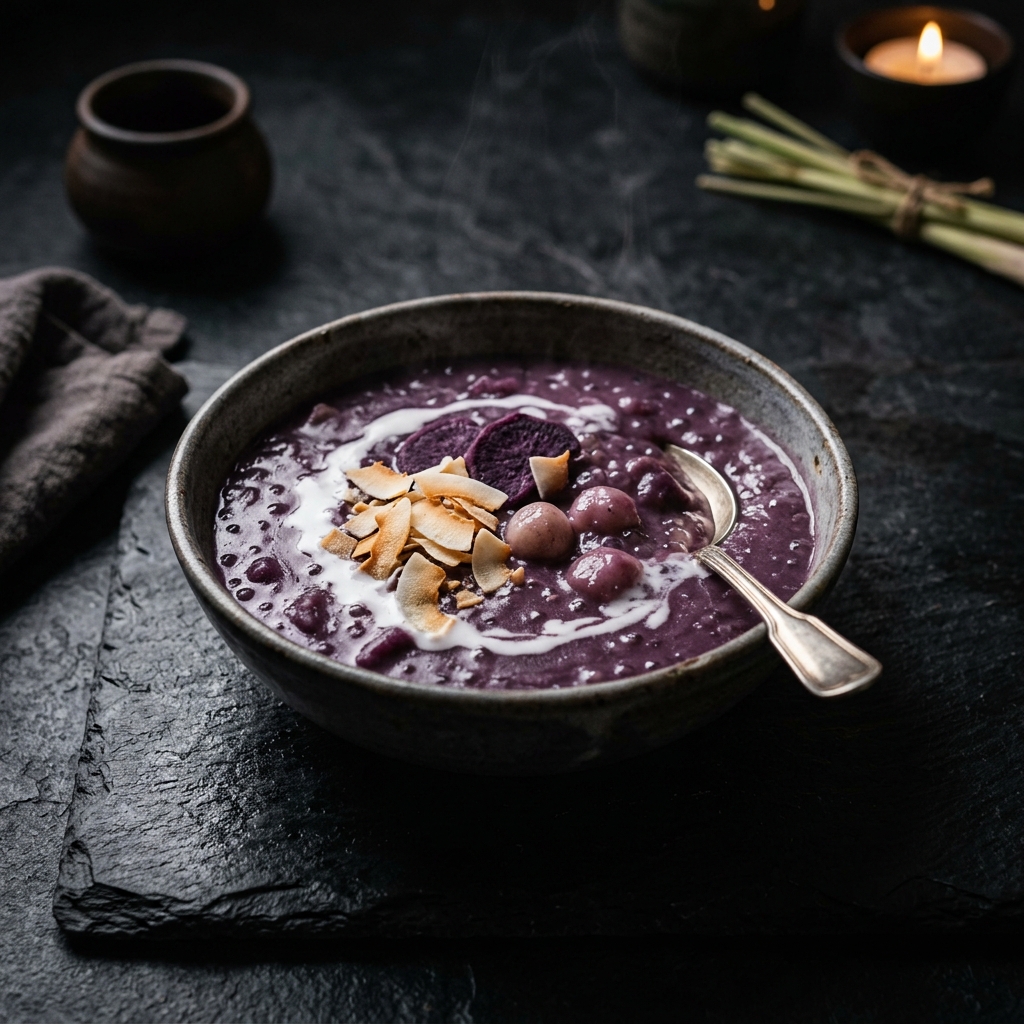
Ube & Coconut Cellular Repair Porridge
A warm, deeply nourishing porridge that pairs the antioxidant power of Ube with the healthy medium-chain triglycerides (MCTs) of coconut milk.
Clinical Focus
Cognitive support, sustained energy, and cellular antioxidant protection.
Steam the Ube until fork-tender, then mash it into a smooth paste.
In a small saucepan, gently warm the coconut milk over low heat.
Whisk the mashed Ube into the coconut milk until it forms a creamy, vibrant purple porridge.
Stir in tapioca pearls or chia seeds and let sit until thickened. Top with toasted coconut flakes.
Clinical Ingredients
- 1 cup steamed and mashed Ube (Purple Yam)
- 1/2 cup organic coconut milk (full fat)
- 1/4 cup tapioca pearls or chia seeds
- 1 tsp maple syrup or monk fruit (optional)
- Toasted coconut flakes for garnish
Therapeutic Focus
Cognitive support, sustained energy, and cellular antioxidant protection.
Sourcing & Preparation
Clinical Grade Equipment


* As an Amazon Associate I earn from qualifying purchases. See our full disclosure.
Scientific Analysis & Clinical Insights
ABSTRACT
Studies on Dioscorea alata have isolated multiple powerful anthocyanin compounds. These natural pigments have demonstrated strong free-radical scavenging abilities, anti-inflammatory effects,
High concentration of acylated anthocyanins
Significant reduction in oxidative stress markers
Protection against neuro-inflammation
Improvement in glucose metabolism
CLINICAL SPECS
Confirms Ube as a highly functional food for preventing oxidative-stress related conditions.
foodDetail.researchDisclaimer
Frequently Asked Questions about Ube (Purple Yam)
Is Ube the same as Okinawan sweet potato?
No, they are different species. Ube (Dioscorea alata) is a true yam with a rough, bark-like skin, while Okinawan purple sweet potato (Ipomoea batatas) has a smoother, lighter skin. Both, howe
Can I eat the skin?
Unlike sweet potatoes, the bark-like skin of the Ube yam is generally too tough and fibrous to eat and should be peeled before or after cooking.