Sulforaphane: The Nrf2 Nutrigenomic Switch
Broccoli's reputation as a 'superfood' is backed by a specific sulfur-containing compound called sulforaphane. Unlike vitamins that act as direct antioxidants, sulforaphane is a nutrigenomic
When sulforaphane enters a cell, it triggers the Nrf2 protein to detach from its inhibitor and move into the cell nucleus. Once inside, it binds to the Antioxidant Response Element (ARE), ini
Phase II Detoxification & Hepatic Integrity
One of the most critical functions of sulforaphane is its role in Phase II detoxification in the liver. While Phase I detox breaks down toxins into intermediate reactive molecules, Phase II i
By supporting hepatic integrity through this pathway, regular sulforaphane intake clinical studies have shown a marked reduction in markers of liver damage and systemic oxidative stress. It i
Ingesting cruciferous isothiocyanates is like providing your cells with a master training manual for environmental defense.
The Sprout Paradox: 50x Potency
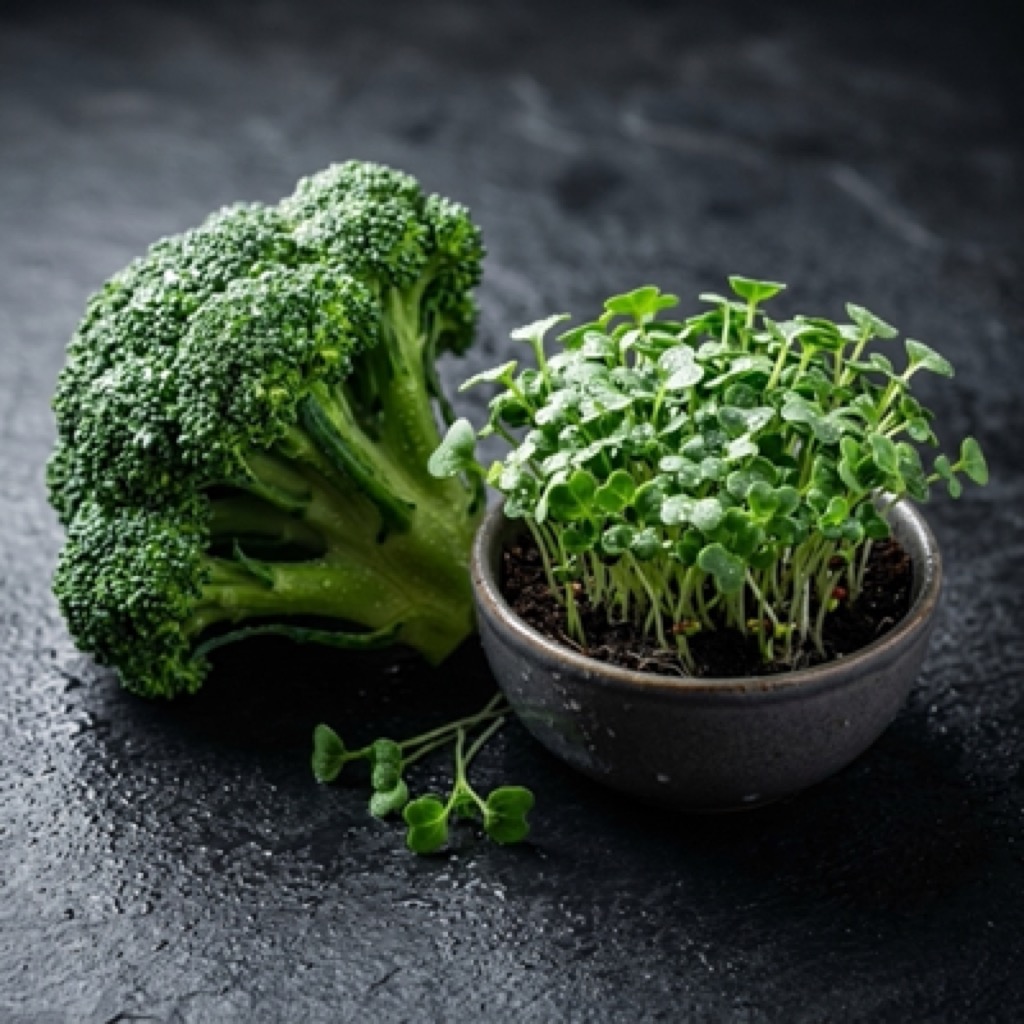
Perhaps the most fascinating clinical insight in the field of cruciferous research is the 'Sprout Paradox.' While mature broccoli is a healthy food choice, its sprouts (3-4 days old) contain
Thermal Sensitivity: Protecting the Enzyme
The creation of sulforaphane requires an enzyme called myrosinase, which is kept in separate compartments within the plant's cells. When the plant is chewed or chopped, the enzyme meets the g
Clinical preparation protocols recommend either eating sprouts raw, or using the 'Chop & Wait' method for mature broccoli. By chopping the florets and letting them sit for 40 minutes before g